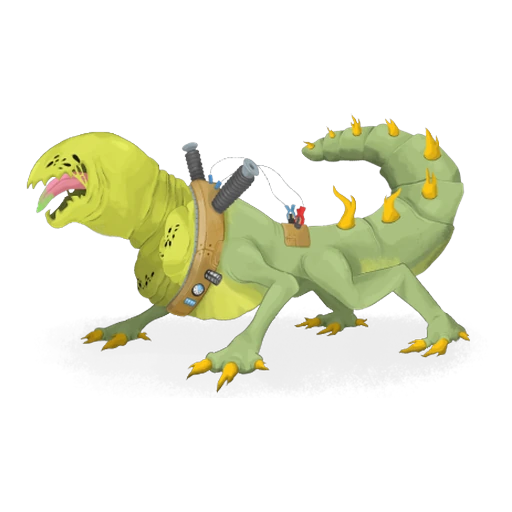
Moves and intents
| Move | Intent | Base attack | Higher-Ascension attack | Other effect |
|---|
| Respawn | Heal + Buff | — | — | 1 painful stabs (self); 1 nemesis (self) |
|---|
| Bite | Attack | 20 | 22 | — |
|---|
| Skull Bash | Attack + Debuff | 14 | 16 | 1 vulnerable (player) |
|---|
| Multi-Claw | Attack | 10 | 11 | — |
|---|
| Lacerate | Attack | 10 × 3 | 11 × 3 | — |
|---|
| Big Pounce | Attack | 45 | — | — |
|---|
| Burning Growl | Status + Buff | — | — | 2 strength (self) |
|---|
Attack pattern
Starts: Bite → Skull Bash; then conditional: Multi-Claw (if respawns < 2) / Lacerate (if respawns >= 2)
Starting effects
Encounter locations
- Test Subject: Act 3 - Glory, boss encounter.
Enrage makes free Skills costly
The opening phase has Enrage: playing a Skill adds Strength to the boss. A zero-Energy Skill still counts. Compare the Block or draw supplied by that card with the stronger attack it enables; playing every available Skill can make the turn worse even though the Energy counter barely changes.
Damage from attacks, Orb effects or already-established Powers can progress the phase with fewer new Skill plays. A useful Skill can still be worth its penalty when it supplies lethal damage, prevents a larger immediate loss or assembles the entire finishing turn. The restriction is a reason to calculate, not to refuse every defensive card.
Test Subject’s second phase
Adaptable means the first apparent kill is a phase transition. The boss revives with a changed move set and additional mechanics. Preserve damage that remains usable after Exhaust cards leave combat.
Later behavior includes Intangible on alternating turns and attacks that punish unblocked damage with Wounds. Check the live power and intent before committing the large attack. An expensive finisher spent into Intangible can leave both its damage and the Energy unavailable when protection is gone.
Coordinate co-op Skills
Multiple players can strengthen the same boss during the party turn. Before everyone plays their draw and Block Skills, agree whether the team can finish the current phase. If a few coordinated plays reach the transition, extra Skills after that point can be unnecessary; if lethal is impossible, count the strengthened incoming attack before deciding to take damage instead.
Temporary Strength reduction is useful against multi-hit attacks later in the encounter, but its exact interaction across a phase transition can be subtle. Use the displayed next-phase powers rather than assuming every temporary debuff persists unchanged.