
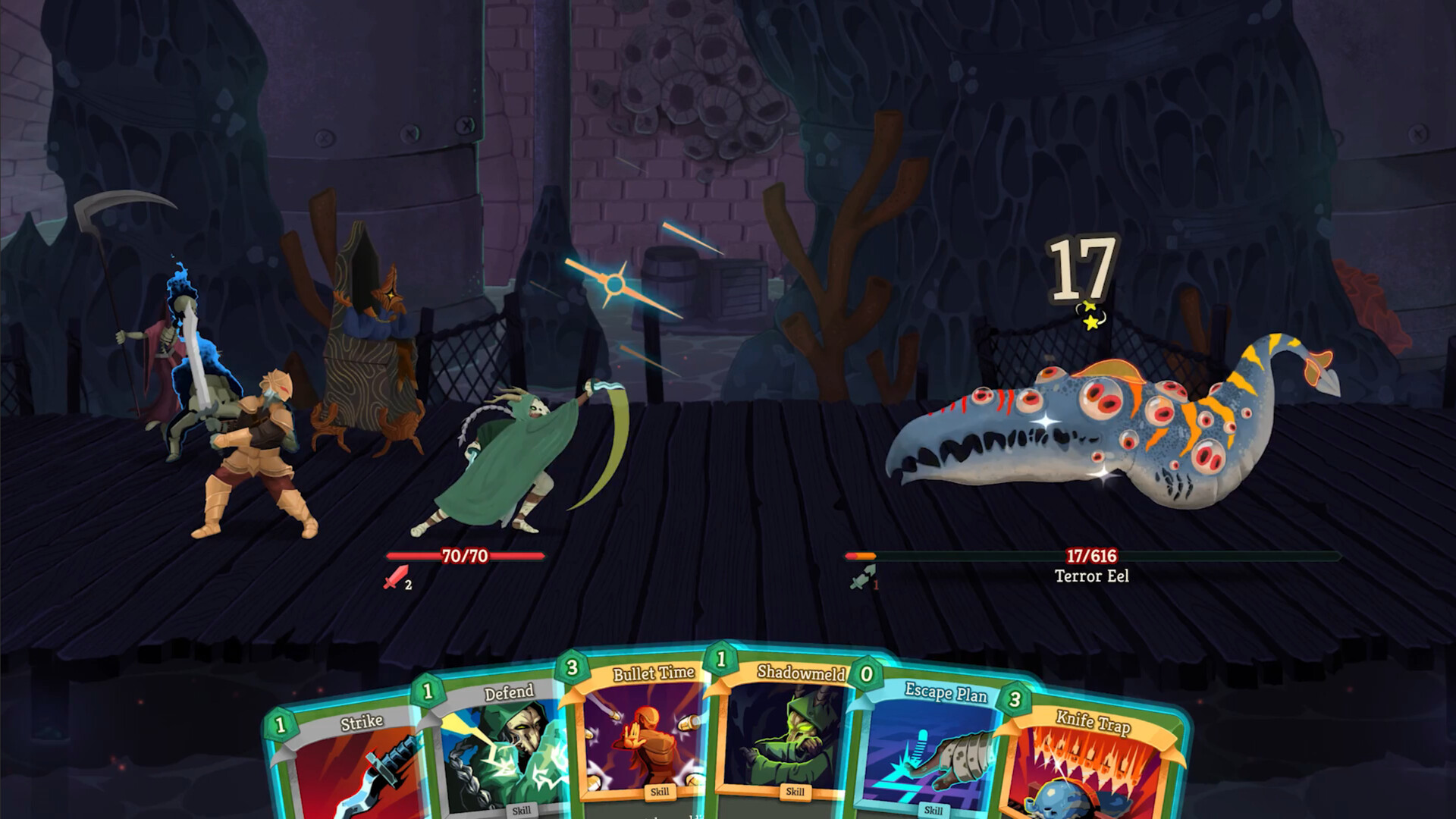
Slay the Spire 2 supports parties of up to four. Each player has a separate deck, Energy pool, Gold and inventory, while the party follows a common route and fights shared enemies. Multiplayer-specific cards create ways to support another character instead of improving only your own turn.
Co-op attack order
Players can act during the same party turn. Tell the group before committing a large attack: an ally may be about to apply Vulnerable, remove an enemy’s Artifact or play a support effect that changes its result. Waiting for the enabling card can improve an attack without spending another resource.
Name the target as well as the effect. Splitting damage across several enemies can leave every attack active; concentrating enough damage to defeat one attacker removes its contribution to the next enemy turn. Area damage is more useful when the whole group is close enough to defeat, or when a surviving enemy’s mechanic requires a different priority.
Enemy statistics scale for multiplayer. A solo damage calculation is not a reliable estimate of how quickly a co-op encounter will end. Check the displayed HP and intent before deciding whether the party can finish a target this turn.
Support and defense
Each player must still account for incoming damage. A teammate’s strong offensive turn does not automatically supply your Block. Check a support card’s actual target: a card helping one ally is different from an effect benefiting the whole party.
When a player dies, the remaining party can continue the fight; a victory revives the fallen player afterward. This creates a practical choice between keeping a threatened teammate alive and ending combat immediately. Communicate the lethal calculation before spending Energy on a rescue the party may not need.
Choosing the support recipient
Ignition makes another player Channel Plasma. Ask which character can convert that resource into useful plays and whether the recipient can use the resulting Orb. Glimpse Beyond adds Souls to every player’s draw pile; that is future draw-pile content, not three cards immediately placed into everyone’s hand.
Tank doubles the user’s incoming enemy damage while halving it for allies. An Ironclad with weak defense can die after volunteering to protect everyone. Compare the displayed incoming damage on both sides before playing it; the team benefit has an explicit cost to its owner.
At a rest site, Mend heals an ally for 30% of that ally’s maximum HP. A healthy player’s rest action can therefore help a threatened partner while that partner uses Smith for an important upgrade. Agree on the recipient first so two players do not spend actions repairing the same small deficit.
Relics, Gold and the next route
Treasure choices are a chance to assign a more suitable relic to the character that can use it. Compare the actual effects before everyone selects the same attractive reward. Mega Crit has specifically explained that it avoids unrestricted resource pooling because concentrating everything on one player can snowball too easily.
Map choices should consider the most vulnerable deck. A route with another elite may be acceptable for the player with strong upgrades but dangerous for a teammate still relying on starter damage. Agree on the next required improvement: healing, a shop, a useful upgrade or more card rewards.
Single-player and multiplayer Ascension progression are separate. Completing a solo climb does not automatically unlock the same multiplayer difficulty.