Burning Blood and the first fights
Ironclad is available from the beginning. Burning Blood heals after combat, so an aggressive turn that ends the fight can be cheaper than defending while an enemy continues to scale. Count the damage prevented by the kill against the damage taken now; the relic does not heal until the encounter is over.
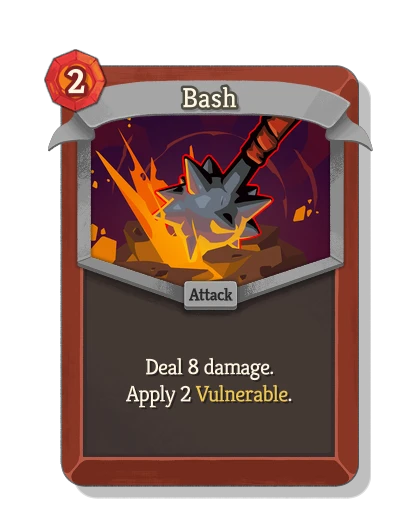
Bash already supplies a way to apply Vulnerable. When the hand can afford the sequence, play it before other attacks. A new attack can improve the opening even without an elaborate engine: the first objective is defeating the enemies on the current route.
Choose the missing effect
| What the deck has | Useful direction | What must still be solved |
|---|---|---|
| A good multi-hit attack | Inflame or another practical Strength source. | Enough defense and draw to use the setup. |
| Cards that Exhaust | Feel No Pain or Dark Embrace when activations are reliable. | Output that remains after cards leave combat. |
| Useful cards that cost HP | Rupture if its Strength changes later attacks. | Surviving the payment and the enemy turn. |
These packages can coexist. An Exhaust effect that fixes a hand can be useful in a Strength deck, and Bash remains useful without additional Vulnerable rewards. Do not fill the deck with future payoffs while waiting for their missing activation source.
Paying HP for a stronger turn
Bloodletting trades health for Energy. Offering adds acceleration at an HP cost. Spend that resource when the additional plays improve the turn: a necessary Block card, a kill, or the draw that assembles both. More Energy has little value in a hand with nothing useful left to play.
With Rupture active, qualifying HP loss during your turn produces Strength. Play the payoff before the self-damage when possible, then use the improved attacks. The incoming enemy attack is not a substitute for a self-damage trigger that requires your own turn.
Burning Blood can recover some of that investment after a win. It does not justify paying health repeatedly while combat continues unresolved. If the deck is spending HP to draw more setup rather than reaching damage or defense, the engine has not covered its cost.
Exhaust without deleting the win condition
Burning Pact converts a selected card into draw. Feel No Pain adds Block when cards Exhaust; Dark Embrace adds draw. Together they can turn weak hands into productive turns, but an attack Exhausted from combat is unavailable later unless another effect restores or replaces it.
Before a boss, identify the remaining damage after the engine has consumed its disposable cards. Against Test Subject, ending the first life does not end the encounter. Save an attack plan for the stronger revived phase.
An upgraded Armaments can improve the whole current hand during combat. Compare that effect with a permanent Smith upgrade: the temporary upgrade helps this encounter but does not permanently alter every card for later fights.
Routes and other players
The Strength guide, Exhaust engine and Rupture guide cover the enabling cards and practical pivots. Use rest or upgrade when another elite competes with recovery.
In co-op, Tank has an explicit personal cost: the Ironclad takes double enemy damage while allies take half. Compare the incoming hit with your own Block before volunteering to protect the group.