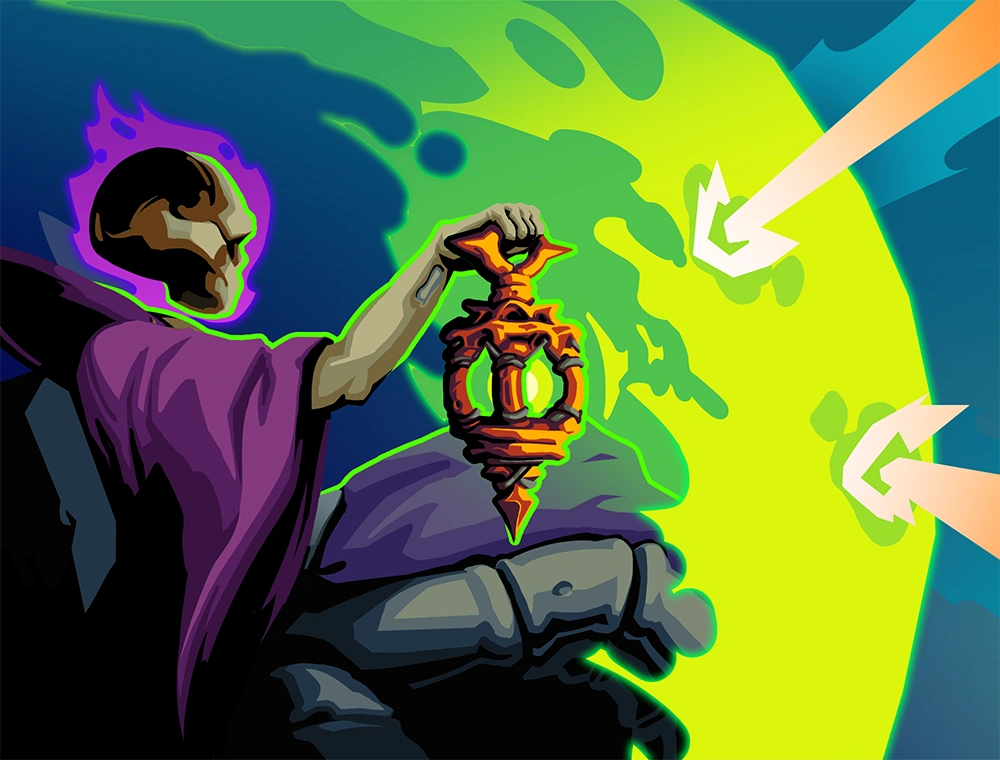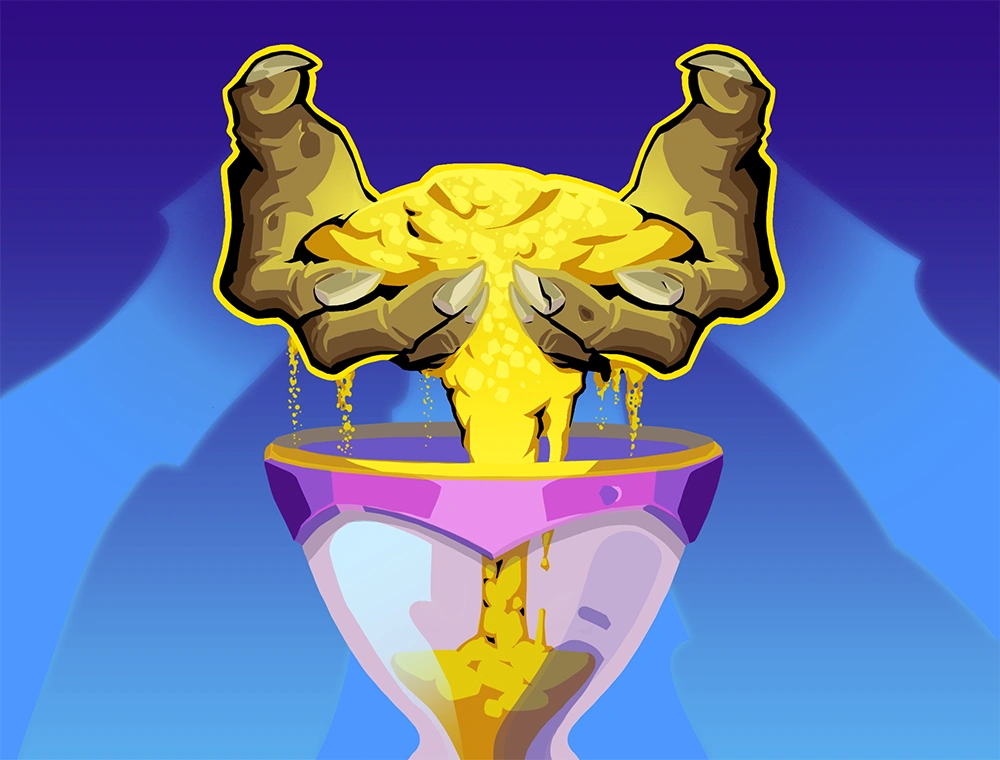
Borrowed Time costs one Energy, grants four, and makes your cards cost one additional Energy for the rest of the turn. The upgrade grants six instead. To evaluate a normal sequence, subtract the initial cost and then one Energy for every ordinary card played afterwards. Base Borrowed Time gives 3 − n extra Energy after n later plays; the upgrade gives 5 − n. These comparisons assume one Borrowed Time, printed costs, no X-cost cards and no other cost-changing effects.
How many plays follow it?
| Ordinary cards after Borrowed Time | Extra Energy available after paying their surcharges | With Borrowed Time+ |
|---|---|---|
| One | 2 | 4 |
| Two | 1 | 3 |
| Three | 0 | 2 |
| Four | −1 | 1 |
| Five | −2 | 0 |
The table compares paying for the same subsequent cards without Borrowed Time. It does not promise the hand is affordable: you still need one Energy to play Borrowed Time, and each card must be affordable at the moment you play it. The extra card itself also occupied a draw. Its upgrade improves the burst by two Energy without reducing the surcharge.
This explains why a hand of expensive cards can benefit more than a long chain of nominally free cards. The surcharge is one per ordinary play, not one per original Energy cost. Paying four instead of three for Reap is a smaller relative penalty than paying one instead of zero for Soul.
A three-Energy hand, played in two orders
Suppose you have three Energy, Borrowed Time, one base Soul and a three-Energy Reap. Soul draws two cards that will not be played during this example. Assume enough hand space, no draw-triggered Energy changes, and no other modifiers.
| Order | Energy after each step | Energy left after Reap |
|---|---|---|
| Soul, Borrowed Time, Reap | 3 → 3 → 6 → 2 | 2 |
| Borrowed Time, Soul, Reap | 3 → 6 → 5 → 1 | 1 |
Both orders let you play Reap. Drawing with Soul first saves one Energy, because that Soul has not yet acquired the surcharge. It also shows the next cards before you decide whether Borrowed Time is needed. If those draws change the kill or Block plan, recalculate before continuing.
Now add a second zero-cost card to the setup. Playing both before Borrowed Time can avoid two points of tax. Do not spend the last Energy on an ordinary setup card and leave Borrowed Time stranded, however. The sequence still needs its one-Energy entry payment.
Borrowed Time with Danse Macabre
Danse Macabre grants four Block whenever you play a card costing at least two Energy; its upgrade grants six. Borrowed Time can make an ordinary one-Energy card qualify. This creates a real reason to put the Energy boost before a card that would otherwise be cheaper to play first.
For example, with Danse Macabre already active, Graveblast costs two after Borrowed Time and can supply the extra Block while retrieving a card. Playing it first costs one and supplies its normal retrieval without that trigger. Compare the extra Energy paid with the Block actually needed. If the enemy is not attacking, creating a qualifying cost does not automatically make the order worthwhile.
The ledger measures Energy only. Add the Block trigger separately rather than treating it as free Energy or assuming every cost increase is beneficial. Several two-cost cards can already qualify without Borrowed Time.
Old Soul infinites and the current card
Early guides describe a zero-cost Borrowed Time that generated Energy while applying Doom to the player. That is a different version. Current Souls cost one after the surcharge, and replaying Borrowed Time can add further surcharge stacks. A loop that relied on free Souls and repeatable untaxed Energy does not follow from the old recipe.
The same caution applies to the word “free.” Touch of Insanity changes a selected card’s cost, but Borrowed Time’s player-wide surcharge can still add Energy to that play. Do not empty your resources into a finisher while counting on a normally zero-cost cleanup card afterwards. Check its current displayed cost before committing.
X-cost and next-turn plans
X-cost cards need a separate calculation. Eradicate spends the available Energy as X, so the amount remaining when it is played determines the hit count. Do the ordinary setup first, then calculate the actual Energy reaching the finisher. Do not insert X-cost plays into the ordinary-card table above.
With Ice Cream, unused Energy carries between turns while Borrowed Time’s surcharge ends with the turn. A late Borrowed Time can therefore bank Energy for a later hand. You still have to survive the current enemy action and draw something useful next turn. Retaining an unaffordable card, finding it with Dredge, or carrying Energy can solve different parts of that plan; none supplies the others automatically.