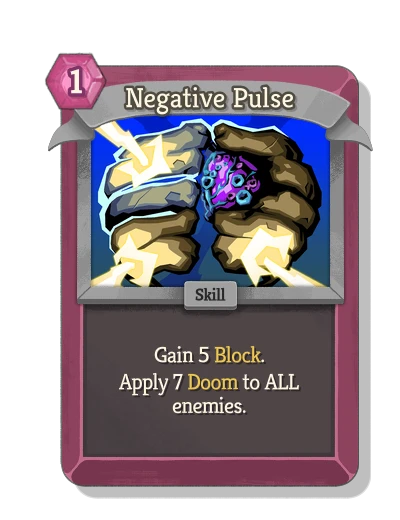
 Negative Pulse
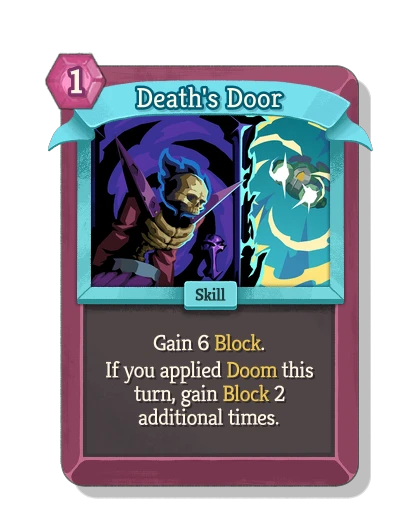 Death's Door
Doom’s lethal timing
Doom kills when its amount reaches the target’s remaining HP at the end of that enemy’s turn. It does not reduce maximum HP, and it does not normally stop the enemy from taking its final action. A target that appears doomed can still require a full defensive response before the combat ends.
This timing creates a practical difference from simply dealing lethal attack damage now. Before spending the rest of the turn on another Doom card, check whether an ordinary attack would remove the enemy before it attacks. Direct damage and Doom cooperate because lowering current HP also lowers the amount of Doom needed.
Defensive applications
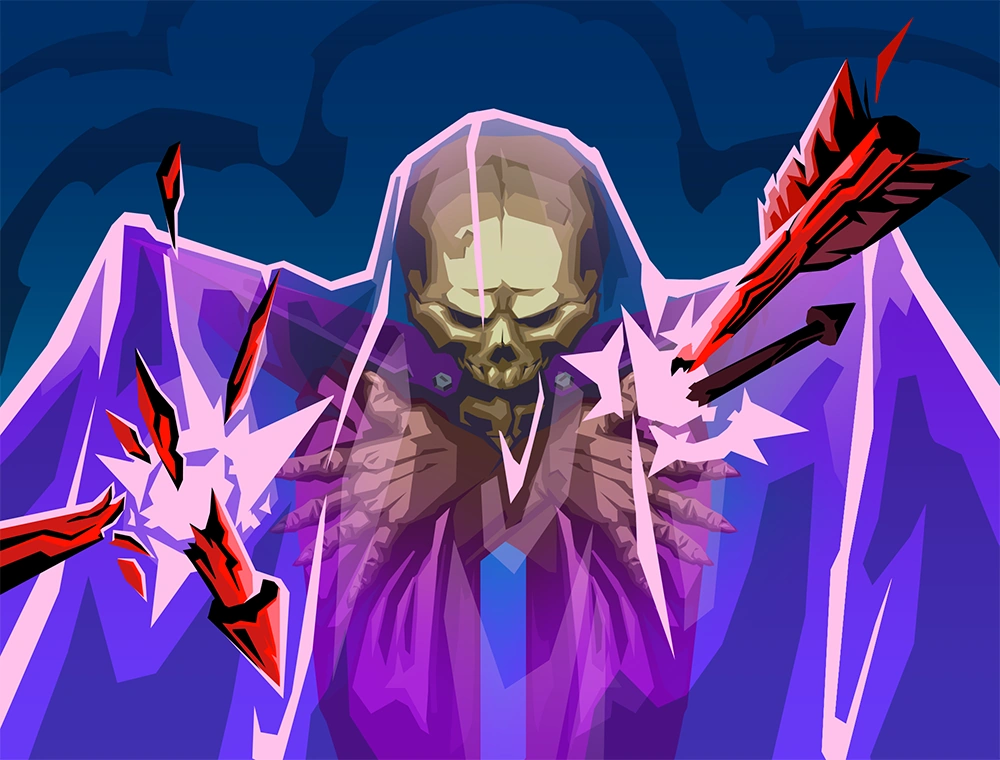
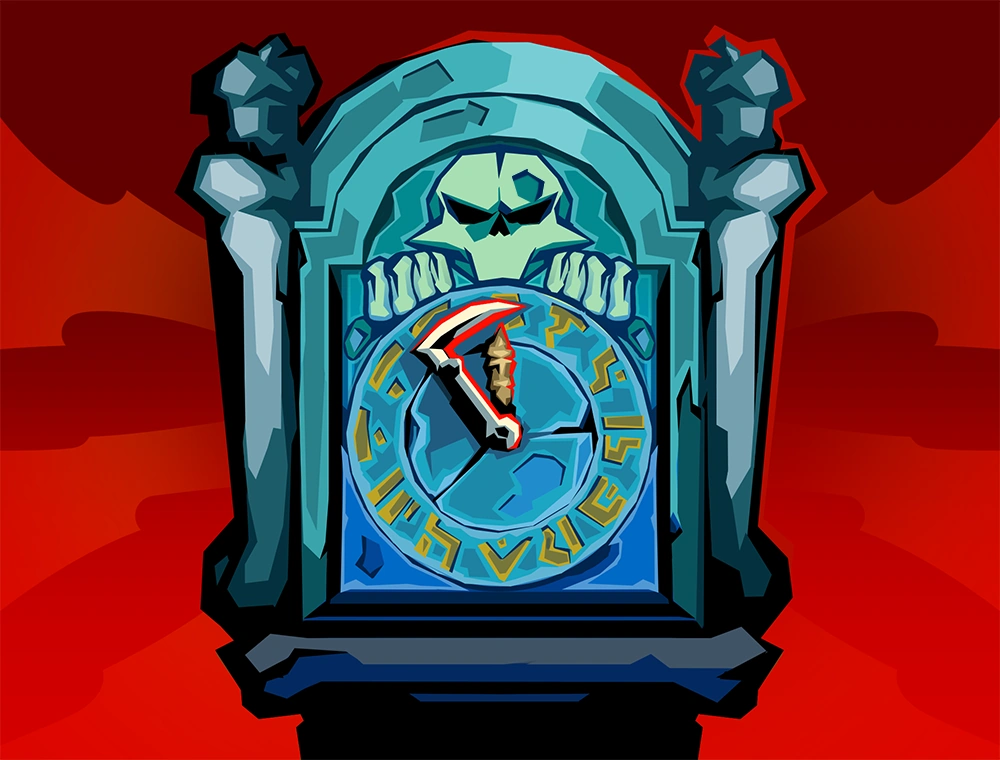
Negative Pulse combines Block with Doom across the enemy group. Death’s Door grants its additional Block when Doom has already been applied during the turn. Play the application before the conditional defensive card; reversing that order can lose the extra Block.
Shroud grants Block when Doom is applied. Its payoff is tied to applications, not merely to the size of a single stack. A larger application and several separate applications can therefore behave differently for this Power. Compare the actual cards available rather than treating every point of Doom as another Shroud trigger.
Growing and spending the stack
Scourge applies Doom and draws. No Escape applies more based on the Doom already present, which makes ordering within the turn relevant. Countdown supplies recurring application, but its random target can be inconvenient when one enemy must die first. The Power’s long-term value does not guarantee the next application lands where it is needed.
End of Days explicitly kills enemies that meet its threshold after its application. That is a separate immediate effect written on the card, not the normal Doom timing. Time’s Up instead converts the target’s Doom into damage. Read the card and incoming intent before choosing between another application and a cash-out effect.
Upgrades and hybrid damage
Improve a defensive card when the stack already grows fast enough but the enemy’s final action remains dangerous. An application upgrade helps when the deck repeatedly falls short of a lethal threshold. Draw may be the better investment if those answers are present but separated across hands.
Souls can support a many-card Oblivion turn. Osty can provide another defensive reserve and an attack that lowers target HP. These are useful additions when they solve a current weakness; the deck does not need to exclude every card without Doom in its text.